
Human in the Loop: What Happens to Cybersecurity Careers in an AI-Driven Future?
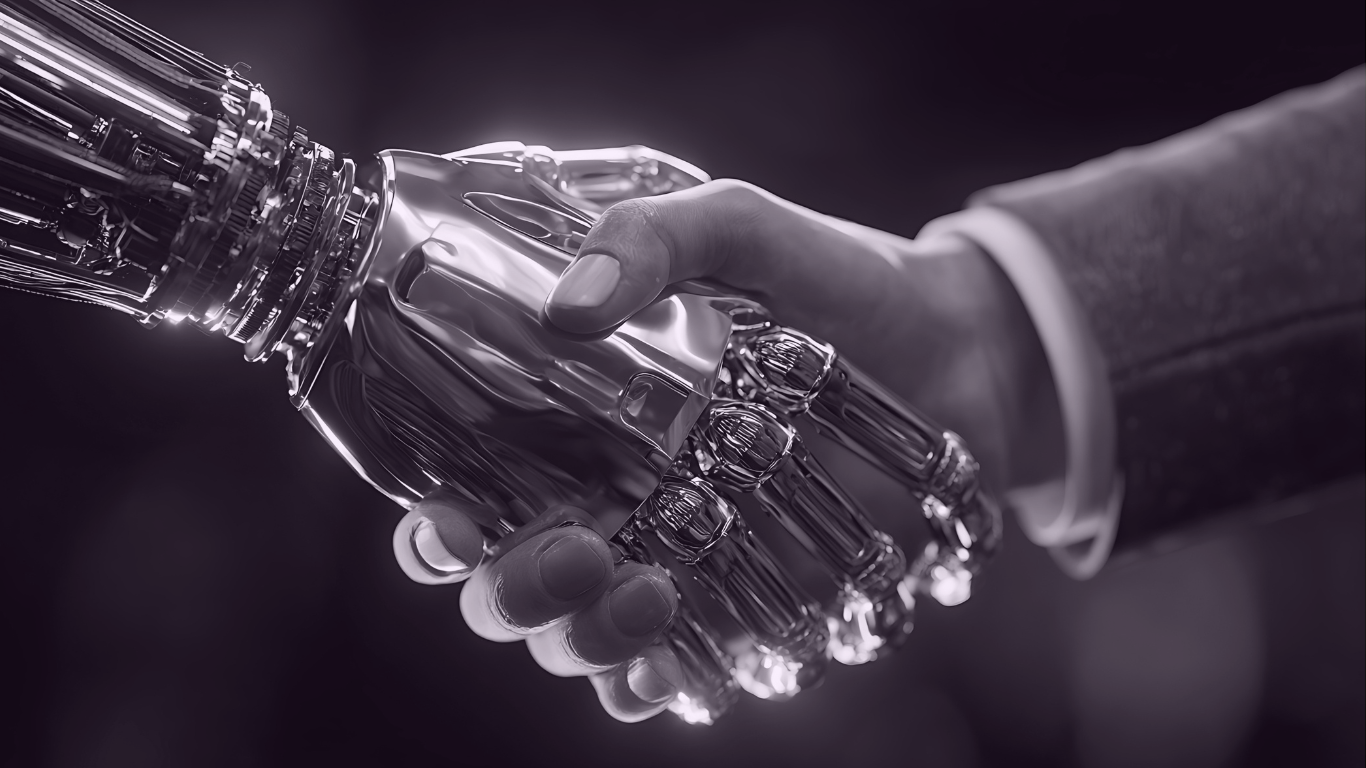
Cybersecurity has always been a people problem disguised as a technology problem.
For years, organisations invested heavily in tools designed to detect threats faster, automate workflows, and reduce operational risk. Yet breaches continued to rise. Attack surfaces expanded. Security teams became overwhelmed by alerts, fragmented environments, and increasingly sophisticated adversaries.
Now, artificial intelligence promises to change the equation.
Across the Philippines and the wider ASEAN region, organisations are rapidly adopting AI-powered cybersecurity capabilities to improve threat detection, automate analysis, and strengthen operational efficiency. AI copilots are entering security operations centres. Automated triage systems are reducing response times. Machine learning models are helping prioritise vulnerabilities at scale.
At the same time, attackers are evolving just as quickly.
Deepfake impersonation scams, AI-generated phishing campaigns, synthetic identities, and autonomous malware development are no longer distant possibilities. They are already shaping the threat landscape facing enterprises today.
This has created a new tension inside the cybersecurity industry. While organisations race to deploy AI, many cyber professionals are quietly asking a more personal question:
What happens to cybersecurity careers in a world where machines increasingly perform the work humans once did?
A Defining Moment for Cybersecurity in the Philippines
The timing of this conversation is significant for the Philippines.
The country is experiencing rapid digital acceleration across banking, telecommunications, healthcare, retail, energy, and government services. Cloud adoption continues to rise. Critical infrastructure is becoming increasingly interconnected. Digital payments and online platforms are now deeply embedded into everyday life.
But as digital dependence grows, so does exposure.
Over the past two years, the Philippines has seen mounting concern around ransomware, phishing campaigns, AI-enabled fraud, and attacks targeting both public and private sector organisations. Government agencies have also warned about escalating geopolitical cyber risks and state-linked activity affecting national infrastructure.
At the same time, many organisations are still navigating uneven cyber maturity.
Some enterprises are experimenting aggressively with AI and automation. Others continue to struggle with legacy systems, fragmented governance, and limited visibility across hybrid environments. This creates a cybersecurity environment where innovation and vulnerability often move side by side.
The talent market reflects this complexity.
Cybersecurity hiring demand across the Philippines remains strong, particularly for cloud security, governance, risk management, identity, incident response, and threat intelligence roles. Yet many organisations continue to face shortages in experienced talent, leadership capability, and specialised expertise.
Ironically, AI may not solve this shortage in the way many initially expected.
Instead, it may fundamentally reshape what valuable cybersecurity talent looks like.
The Traditional Cybersecurity Career Path Is Changing
For decades, cybersecurity careers were built through repetition.
Junior analysts learned by monitoring alerts, reviewing logs, analysing phishing attempts, escalating incidents, and gradually developing operational instinct. Security operations centres became training grounds where technical pattern recognition was developed through exposure and experience.
AI is beginning to disrupt that pathway.
Many of the repetitive operational tasks that once defined entry-level security work are increasingly being automated:
- alert triage
- anomaly detection
- log correlation
- report generation
- threat prioritisation
- basic incident investigation
In some environments, AI systems can already perform these functions faster and more consistently than human analysts.
This raises a difficult but necessary question for the industry.
If AI absorbs much of the operational workload traditionally handled by junior practitioners, how will the next generation of cybersecurity professionals build experience?
The concern may no longer be simply a shortage of people.
It may become a shortage of human capability development.
Human Judgment Is Becoming More Valuable
Despite rapid advances in automation, cybersecurity leaders across ASEAN increasingly agree on one point: accountability cannot be automated.
Cybersecurity is not solely about identifying malicious code or blocking suspicious traffic. It is about managing uncertainty, trust, and consequence.
A cyber incident affects:
- business continuity
- customer confidence
- regulatory exposure
- public trust
- operational resilience
- executive reputation
AI can analyse patterns at scale.
But it cannot fully understand organisational context, political sensitivity, ethical nuance, or human emotion.
When a major breach occurs, organisations do not simply need technical remediation. They need leadership.
Someone must decide:
- how much risk is acceptable
- when systems should be shut down
- how incidents are communicated
- what regulators should be told
- how customer trust is rebuilt
- whether an AI-generated decision should be trusted at all
These are deeply human responsibilities.
As cybersecurity becomes increasingly AI-assisted, the most valuable skills in the industry may shift away from purely technical execution and toward:
- judgment
- governance
- communication
- resilience planning
- leadership
- strategic thinking
In many ways, AI may elevate the importance of human capability rather than diminish it.
The Rise of the AI-Augmented Security Team
The future security operations centre is unlikely to become fully autonomous.
Instead, many organisations are moving toward an AI-augmented operating model where humans and machines work together in layered decision-making environments.
AI will likely become responsible for:
- processing large-scale telemetry
- automating repetitive analysis
- accelerating threat investigation
- identifying behavioural anomalies
- reducing operational noise
Human teams, meanwhile, may increasingly focus on:
- contextual interpretation
- escalation decisions
- crisis leadership
- threat hunting
- adversarial thinking
- governance oversight
- stakeholder communication
This shift could reshape cybersecurity teams entirely.
Future SOCs may become leaner but more strategic. Cyber professionals may spend less time reacting to alerts and more time managing resilience, intelligence, and business risk.
However, this transformation also introduces new forms of pressure.
As AI tools proliferate, cybersecurity professionals may face:
- increased cognitive overload
- growing dependency on AI outputs
- pressure to oversee systems they do not fully understand
- uncertainty around accountability when AI systems fail
The challenge is no longer simply keeping humans in the loop. The challenge is designing the loop responsibly.
The Next Cybersecurity Skills Gap
For years, the cybersecurity industry framed its workforce challenge as a talent shortage.
That narrative is now evolving.
The real issue may not be whether enough people enter cybersecurity. It may be whether organisations are developing the right mix of capabilities for an AI-driven future.
Tomorrow’s cyber professionals may need:
- AI governance literacy
- adversarial AI understanding
- business communication capability
- data ethics awareness
- policy and regulatory fluency
- risk interpretation skills
- cross-functional leadership capability
Technical expertise will remain essential. But technical knowledge alone may no longer be enough.
The future cybersecurity leader may not be the person who understands the most tools.
It may be the person who can best bridge technology, business strategy, governance, and human behaviour.
Beyond Automation
There is a tendency within the technology industry to frame AI as a replacement story.
Cybersecurity is unlikely to follow that path so neatly.
The reality emerging across the industry is far more nuanced.
Some operational tasks will disappear. New roles will emerge. Career pathways will evolve. Human judgment will become more valuable in different ways.
Ultimately, the future of cybersecurity may not be defined by humans versus machines.
It may be defined by how effectively humans learn to lead alongside increasingly intelligent systems while still retaining accountability for the outcome.
Because when trust breaks, systems fail, or national infrastructure comes under pressure, organisations will still look to people, not algorithms, to make the decisions that matter most.
Join us at CISO Philippines 2026 to learn more about the latest challenges and developments for infosec executives in the country. Reach out to Eleen Meleng to learn more.